
Admin 25 Dec 2025
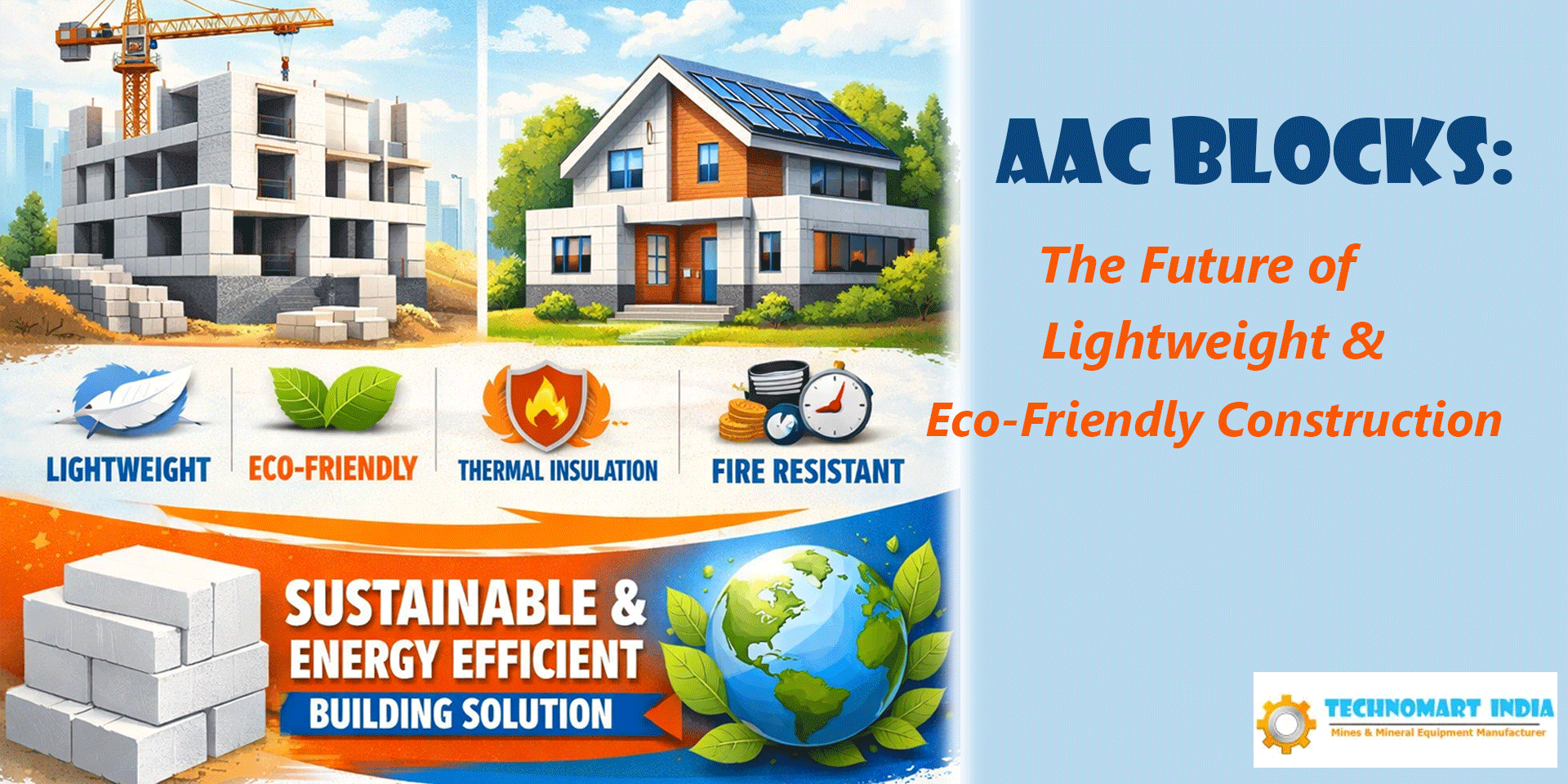
The construction industry is undergoing a major transformation as builders, architects, and developers increasingly focus on sustainability, efficiency, and cost-effectiveness. Traditional building materials such as clay bricks and solid concrete blocks, while widely used, often come with limitations in terms of weight, thermal insulation, and environmental impact. This is where AAC blocks (Autoclaved Aerated Concrete blocks) are emerging as a revolutionary solution. Lightweight, strong, and environmentally friendly, AAC blocks are rapidly becoming the preferred choice for modern construction projects across residential, commercial, and industrial sectors.
AAC blocks are precast building materials manufactured using natural raw materials such as cement, lime, fly ash or sand, water, and a small quantity of aluminum powder. During the manufacturing process, aluminum reacts with calcium hydroxide to generate tiny air bubbles, resulting in a cellular structure. The blocks are then cured under high pressure and temperature in an autoclave, which gives them excellent strength, dimensional accuracy, and durability.
Because of this unique process, AAC blocks are significantly lighter than traditional bricks while maintaining high load-bearing capacity. Their porous structure also provides superior thermal and sound insulation, making them ideal for energy-efficient buildings.
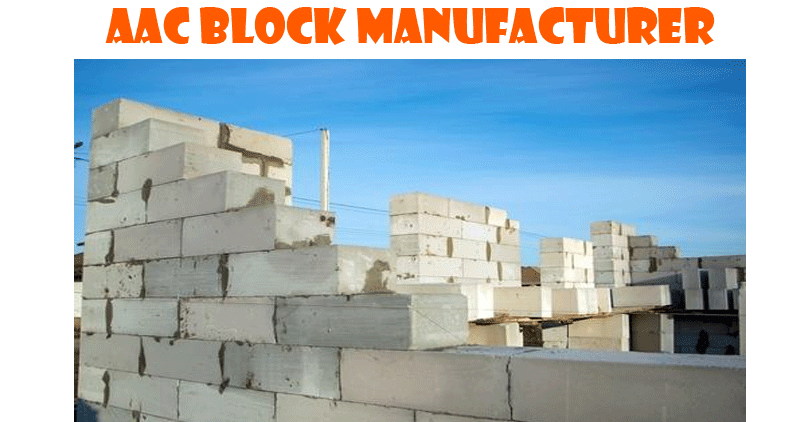
One of the most notable advantages of AAC blocks is their lightweight nature. AAC blocks are approximately 3–4 times lighter than conventional clay bricks. This reduction in weight translates directly into several structural benefits. Lighter walls reduce the dead load on foundations and structural elements, allowing for optimized structural design and reduced use of steel and concrete.
Despite being lightweight, AAC blocks offer impressive compressive strength, making them suitable for both load-bearing and non-load-bearing walls. Their strength-to-weight ratio is one of the key reasons why AAC blocks are widely adopted in high-rise buildings and seismic zones.
AAC blocks play a significant role in promoting eco-friendly construction. Many AAC manufacturers use industrial by-products such as fly ash, which helps in waste utilization and reduces environmental pollution. The manufacturing process consumes less raw material compared to traditional bricks, and the blocks require less energy during construction due to faster installation and reduced mortar consumption.
In addition, AAC blocks contribute to lower carbon emissions over the life cycle of a building. Their excellent thermal insulation properties reduce the need for artificial heating and cooling, leading to long-term energy savings and a smaller carbon footprint. This makes AAC blocks a preferred material for green buildings and sustainable construction projects.
Energy efficiency is a critical requirement in modern construction, and AAC blocks excel in this area. The air pockets within AAC blocks act as natural insulators, significantly reducing heat transfer. Buildings constructed with AAC blocks remain cooler in summer and warmer in winter, enhancing indoor comfort while lowering energy bills.
AAC blocks also offer excellent sound insulation, making them ideal for residential apartments, hotels, hospitals, educational institutions, and commercial spaces. The cellular structure absorbs sound waves effectively, reducing noise transmission between rooms and from external sources.
Speed and efficiency are vital in today’s fast-paced construction environment. AAC blocks are larger in size and have precise dimensions, which allows for faster laying and uniform joints. This reduces construction time significantly when compared to conventional bricks.
Moreover, AAC blocks require thinner mortar joints and minimal plastering due to their smooth surface finish. This leads to savings in cement, sand, and labor costs. Over the long term, reduced maintenance and lower energy consumption further enhance cost efficiency, making AAC blocks a financially viable choice for builders and developers.
Safety is a crucial aspect of building design, and AAC blocks provide excellent fire resistance. Due to their inorganic and non-combustible nature, AAC blocks can withstand high temperatures for extended periods without releasing toxic gases. This makes them suitable for fire-rated walls and safety-critical structures.
AAC blocks also offer resistance to pests, termites, and mold, ensuring healthier indoor environments and longer building life. Their durability minimizes the need for frequent repairs, adding to their overall reliability.
AAC blocks are highly versatile and can be easily cut, drilled, or shaped using standard tools. This flexibility allows architects and designers to create innovative designs without compromising structural integrity. AAC blocks are suitable for a wide range of applications, including residential buildings, commercial complexes, industrial structures, and infrastructure projects.
From partition walls to load-bearing walls, AAC blocks adapt seamlessly to diverse construction requirements. Their uniformity ensures consistent quality and improved aesthetics across projects.
Sustainable construction also focuses on minimizing waste, and AAC blocks contribute significantly in this regard. Their precise manufacturing reduces breakage during transportation and handling. Any waste generated on-site can often be recycled, further reducing environmental impact.
Additionally, the use of AAC blocks reduces the demand for natural clay, helping preserve fertile agricultural land that would otherwise be used for brick kilns.
As urbanization continues to grow and environmental regulations become more stringent, the demand for sustainable building materials will only increase. AAC blocks align perfectly with the future of construction by offering a balance between performance, sustainability, and cost efficiency.
Governments and regulatory bodies worldwide are encouraging the use of green building materials, and AAC blocks meet many of these requirements. Their compatibility with modern construction techniques, including prefabrication and modular construction, further strengthens their position as a future-ready material.
AAC blocks represent a major advancement in building technology, addressing the key challenges faced by the construction industry today. Their lightweight nature, eco-friendly composition, superior insulation properties, and cost efficiency make them an ideal choice for sustainable and modern construction projects.
As builders and developers look for materials that deliver long-term value while reducing environmental impact, AAC blocks stand out as the future of lightweight and eco-friendly construction. Investing in AAC block technology not only enhances construction efficiency but also contributes to a greener and more sustainable built environment for generations to come.

Technomart India is a leading cement plant manufacturer offering turnkey solutions with energy-efficient and high-performance systems. With decades of experience, it serves clients across India and global markets.
Owned & Powered by : #1 Vinayak InfoSoft - SEO Company Ahmedabad | Sitemap