

Admin 21 Feb 2026
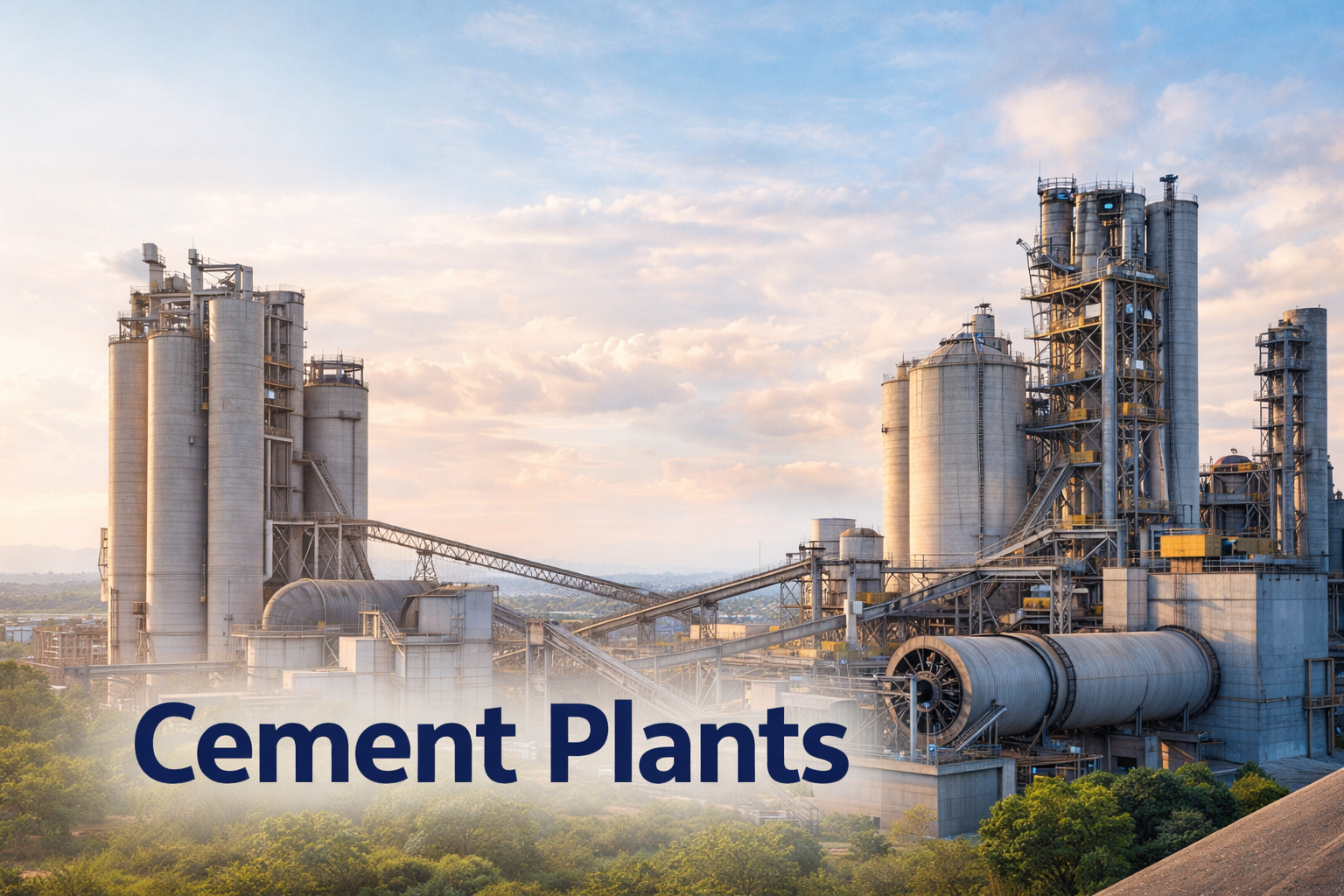
Cement plays a crucial role in infrastructure development, from residential buildings and highways to bridges, dams, and commercial complexes. Behind every strong structure is a highly advanced cement plant operating with precision, efficiency, and cutting-edge manufacturing technology. Over the years, cement production has evolved significantly, with modern plants focusing on automation, energy efficiency, sustainability, and large-scale output.
Modern plants use multi-stage cyclone preheaters to preheat raw materials before entering the rotary kiln. This significantly reduces fuel consumption.
Precalciners allow partial calcination of raw materials before entering the kiln, improving efficiency and output capacity.
Benefits:
The rotary kiln is the heart of any cement plant. It converts raw material into clinker at temperatures of around 1450°C.
Modern rotary kilns are equipped with:
Cement production generates large amounts of waste heat. Modern cement plants capture this heat and convert it into electricity using waste heat recovery systems.
Advantages:
Vertical Roller Mills are increasingly replacing traditional ball mills in cement grinding.
Benefits of VRM:
Industry 4.0 technologies have transformed cement manufacturing. Modern plants use:
Top cement plants operate at massive production capacities. Modern integrated cement plants can produce:

Technomart India is a leading cement plant manufacturer offering turnkey solutions with energy-efficient and high-performance systems. With decades of experience, it serves clients across India and global markets.
Owned & Powered by : #1 Vinayak InfoSoft - SEO Company Ahmedabad | Sitemap